You ate a proper lunch and by three o’clock you’re standing at the pantry again, which makes no sense on paper. Two people can eat the same number of kilojoules and one of them is fine until dinner while the other isn’t.
High satiety foods are the ones that combine a meaningful amount of protein, enough fibre to slow digestion, and low energy density, meaning few kilojoules for a large physical volume of food. Boiled potatoes, oats, fish, eggs, legumes and Greek yoghurt are the clearest examples, and they hold appetite steadier than foods of equal energy that lack those features. The effect is hormonal and mechanical rather than a matter of discipline: protein raises the gut hormones that signal fullness, fibre slows the rate food leaves the stomach, and volume stretches the stomach wall, which sends its own message to the brain.
If you change one thing today, pick the meal you’re least full after and swap its most processed component for the whole, chewable version. Juice to whole fruit, chips to a boiled potato, white bread to oats.
Three properties do most of the work: protein percentage, fibre content, and energy density, which is how many kilojoules are packed into each gram.
Protein is the heavyweight. Gram for gram it holds appetite better than carbohydrate, which in turn does better than fat, and the reason is hormonal. Eating protein raises amino acids in the blood, which triggers the release of cholecystokinin, GLP-1 and peptide YY, gut hormones that signal fullness to the brain while suppressing ghrelin, the hormone that drives hunger in the first place.
Fibre works along a different route. It slows gastric emptying, feeds gut bacteria that produce their own satiety signals, and adds bulk that stretches the stomach wall, which activates stretch receptors reporting back to the brain through the vagus nerve. That conversation between gut and brain is why a bowl of lentil soup sits differently to a soft drink of the same energy.
Energy density is the one people skip. Food loaded with water and air, a vegetable soup or a large salad, fills the stomach for relatively few kilojoules. A shortbread biscuit does the reverse: dense, small, gone in four bites, and barely registered.
Texture and structure count as a separate driver. Whole, intact foods that need chewing slow you down and generate more sensory feedback than a smoothie made from the same ingredients, and reviews of satiety research treat those structural cues as a real effect in their own right rather than a by-product of the fibre and protein.
So a filling food usually carries a meaningful protein contribution rather than a token garnish, enough fibre to slow digestion and add bulk, low energy density from water or air, and a structure you have to chew.
A higher score means more fullness for the same energy cost. Not everything below appeared in the original satiety index research, but each has either a measured score or a documented mechanism behind it.
| Food | What the evidence says | How to use it |
| Boiled potatoes | 323 per cent on the satiety index, the highest of any food tested | Skin on, alongside a protein source, rather than as a side of chips |
| Fish | Ling scored 225 per cent, among the highest of any protein tested | 150 g of a lean white fish such as snapper or flathead, grilled or baked, with vegetables |
| Oats | 209 per cent, largely thanks to beta-glucan, a soluble fibre that gels in the gut | Cooked with milk rather than water, with a tablespoon of chia if you need it to reach 10am |
| Oranges and apples | 202 per cent and 197 per cent, well ahead of most processed snacks | Whole, not juiced. The fibre matrix and the chewing both matter |
| Eggs | Two eggs give roughly 12 g of complete protein for few kilojoules | Boiled, poached or in a vegetable-heavy omelette |
| Legumes | Plant protein plus soluble fibre, a combination few foods manage | A cup of cooked lentils through a soup or curry adds bulk and protein cheaply |
| Greek yoghurt | Straining removes whey, so a 200 g tub carries 15 to 20 g of protein | Unsweetened, with fruit you add yourself |
| Cottage cheese | Almost pure casein, which digests slowly and releases amino acids over a longer window | With capsicum sticks or wholegrain crackers, as a snack that outlasts a bar |
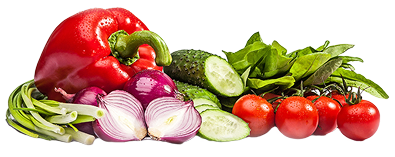
| Non-starchy vegetables | Almost entirely water and fibre, so the volume is large and the energy cost small | Half the plate, filled before the protein and carbohydrate go on |
| Quinoa | More protein per 100 g than rice or couscous, plus a decent fibre load | As the base of a bowl with legumes and vegetables |
| Lean red meat and poultry | Dense protein with little fat, useful when kilojoules are tight | 120 to 150 g cooked weight per meal |
| Broth-based soups | Water volume and warmth appear to add fullness beyond the ingredients alone | Before the main part of a meal |
| Popcorn | Air-popped, it’s mostly air and fibre, one of the few high-volume snack foods | Plain. Butter and caramel turn it back into an energy-dense food |
Two things about that ranking deserve saying plainly. The satiety index comes from a single study that fed small groups of people equal-energy portions of 38 different foods and tracked fullness over the following two hours. It remains a useful ranking and it has never been repeated at scale, so treat the exact percentages as indicative rather than precise. And a high score makes eating less feel more manageable, which is a smaller claim than calling a food a weight-loss tool.
A filling food buys you an easier afternoon. What it can’t do is tell you why the afternoon was hard in the first place.
Pro Tip: Build the plate in this order: protein first, fibre-rich vegetables second, carbohydrate last.
Satiety varies between people, and between weeks in the same person. Individual variation in gut peptide response means two people can eat the same boiled potato and feel different levels of fullness, because GLP-1, PYY and CCK release varies from person to person depending on gut health, genetics and how long someone has been eating a heavily processed diet.
Ultra-processed foods complicate it further. They’re engineered for palatability, and that sensory reward can override fullness signalling even when the stomach is objectively full. Sleep deprivation and sustained stress both push ghrelin up and leptin down, which stacks the odds against you regardless of how many lentils are on the plate. Some medications change appetite regulation too, in both directions.
On that last point, one thing worth stating plainly: BBN does not prescribe, supply or promote medication of any kind. Where a client is taking prescribed weight-loss medication, our practitioners work alongside the prescribing practitioner rather than around them, and appetite is one of the things we watch closely in that situation, because a sharply reduced intake makes protein and fibre harder to reach, not easier.
None of this makes high satiety foods pointless. It makes them a lever rather than a guarantee, and it explains why the same food list produces different results in different bodies.
Yes, and a week is long enough to notice something. Three rules, applied without changing anything else, will tell you more about your own appetite than another food list will.
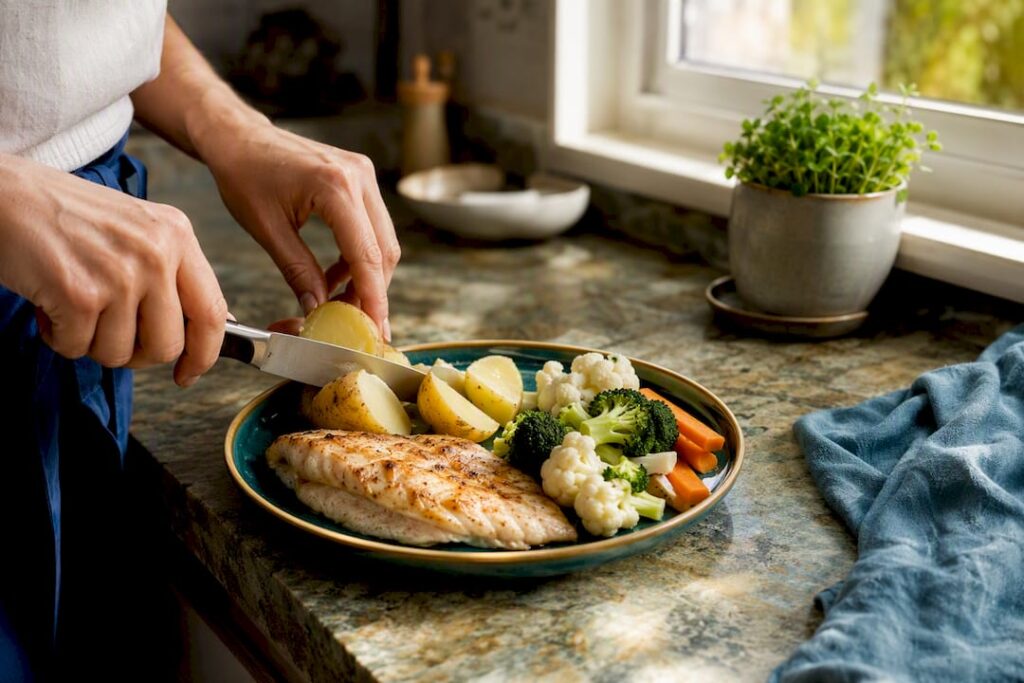
Breakfast is porridge made with milk, topped with chopped apple and a spoon of Greek yoghurt. Lunch is a quinoa and lentil bowl with roasted capsicum, zucchini and 100 g of grilled chicken. Dinner is baked fish, a medium boiled potato and a large serve of steamed greens, which maps almost exactly onto the top of the satiety index. For snacks: cottage cheese with capsicum sticks, or a boiled egg with a small apple. For plant-based eaters, swap the fish and chicken for tofu, tempeh or a larger legume serve, and expect to eat a slightly bigger portion to match the protein grams.
A shopping list for the week: potatoes, rolled oats, eggs, a firm white fish, dried or tinned lentils, Greek yoghurt, cottage cheese, mixed non-starchy vegetables, and a bag of apples or oranges.
Seven days is too short a window for body composition to move in any meaningful way, so measuring this by weight will tell you nothing useful. What it can tell you is whether the gap between meals gets easier, whether the 3pm pantry trip stops happening, whether you finish dinner without going back for more, and how you sleep. Those are the readings worth writing down. Weight trends belong on a longer horizon, alongside how your clothes fit, what your energy does through the afternoon, and what happens to your strength in training.
Pro Tip: Portion size still matters with filling foods. A large bowl of oats carries a lot of energy however well it holds you, and the point of this list is to make an appropriate portion feel like enough rather than to make quantity irrelevant.
Boiled potatoes score highest on the satiety index at 323 per cent compared with white bread at 100 per cent. Ling fish, oats and legumes follow closely, on the strength of their protein and fibre content. Those scores come from a single study, so use them as a ranking rather than a precise measurement.
High-protein foods such as eggs, fish and Greek yoghurt do the most, because protein triggers the release of the gut hormones CCK, GLP-1 and PYY, which carry the fullness signal, while suppressing ghrelin. Fibre-rich foods add to that by slowing how quickly the stomach empties.
Choose high-volume, high-fibre foods such as broth soups, non-starchy vegetables and whole fruit. They stretch the stomach and slow digestion, which activates the same fullness signalling that a larger quantity of denser food would. Eating slowly and leaving 20 minutes before deciding on a second serve gives those signals time to arrive.
Foods that combine protein, fibre and water volume, such as a legume soup, boiled potato with fish, or a Greek yoghurt and fruit bowl. They trigger several satiety mechanisms at once rather than relying on any single one, which is why they tend to outlast a snack of equal energy.
They make eating less feel more manageable, which supports appetite control and weight maintenance. Individual variation in gut hormone response, sleep, stress and medication all shape the result, so they work best as one part of a plan built around your situation rather than as a standalone answer.
Protein, fibre, low energy density and a structure you have to chew explain most of what makes a food filling, and the foods that carry all four hold appetite far better than their energy content alone would predict.
| Point | Details |
| Three drivers, plus texture | Protein percentage, fibre content and energy density, with chewing and structure as a separate effect. |
| The top of the list | Boiled potatoes at 323 per cent, ling fish at 225 per cent, oats at 209 per cent, oranges at 202 per cent and apples at 197 per cent. |
| The mechanism is hormonal | Protein raises CCK, GLP-1 and PYY while suppressing ghrelin. Fibre slows gastric emptying and adds bulk. |
| Response varies between people | Gut health, sleep, stress, medication and years of processed eating all change how strongly those signals fire. |
| Read progress on more than weight | Over a week, watch the gap between meals, afternoon energy and sleep. Weight trends belong to a longer horizon. |
| Where BBN fits | A $49 Health Check with Maria maps your symptoms, history and eating patterns, with body composition measured at our Perth clinic. |
Eat less and move more is the advice almost every woman in her forties has been given, usually more than once. It addresses the Body pillar squarely: what goes on the plate and how much you move, and it holds up as physics. Plenty of people lose weight on it for a while, and the ones who do aren’t imagining it.
What it never mentions is why hunger got louder in the first place. It says nothing about Biology, the hormonal shift through perimenopause that changes appetite signalling, insulin handling and how much muscle you hold, or about the broken sleep that raises ghrelin before you’ve eaten anything. It says nothing about Brain, where stress load and a decade of dieting history shape what happens at 9pm. And it says nothing about Behaviour, the shopping, the timing and the environment that decide what’s within reach when appetite peaks. Advice built on one pillar is incomplete rather than incorrect, and eating less while three of the four are working against you is why the first month goes well and the third doesn’t.
The BBN Bridge names all four in order: Biology, Brain, Body and Behaviour. Midlife tends to change every one of them within a few years of each other. Which one is loudest for you is the question a food list can’t answer.
BBN’s practitioners are nutritionists, clinical nutritionists and Accredited Practising Dietitians. When a client tells us she’s hungry all afternoon, the first job is working out which of the possible explanations is doing the most work: protein sitting too low across the day, sleep debt, a stress load that hasn’t shifted in two years, a medication effect, or a plate that’s been shrinking for months.
At our Perth clinic an InBody 570 body composition scan gives a baseline for muscle, body fat and fluid separately, which matters here because muscle mass drives a good part of daily energy needs and appetite tracks that. Telehealth appointments cover the same ground without the scan. Some services may be eligible for funding depending on the practitioner, the service, your referral, the funding criteria and your individual cover.
If the list above is already roughly what you eat, and the afternoons are still hard, the answer probably isn’t another food swap. Hunger that won’t settle can come from protein sitting too low, from sleep, from stress, from a medication, or from months of eating less than your body is running on, and those look identical from the outside.
That is what our $49 Health Check is for.
Every BBN client starts with a private 45-minute appointment with Maria, our owner and Health Coach. Together, you will look at your symptoms, health and weight history, sleep, energy, eating patterns, movement and what you have already tried.
At our Perth clinic, your appointment includes an InBody 570 body composition scan. This allows us to look at muscle, body fat and fluid separately, rather than averaging everything into one number.
You will leave with a clearer understanding of:
You won’t be handed a generic plan or pressured to sign up for anything. The Health Check is designed to help you understand your starting point before you spend more time, money and effort on an approach that may not fit.
Telehealth appointments include the same detailed review of your symptoms, history and priorities, without the body composition scan.
45 minutes. $49. Measure, don’t guess.
This article provides general nutrition information rather than individual clinical advice. Speak with your GP or an appropriately qualified practitioner about your own situation.
Kickstart Your Journey to Better Health with Our Balanced Health Blueprint Consult – $49 (valued at $139)